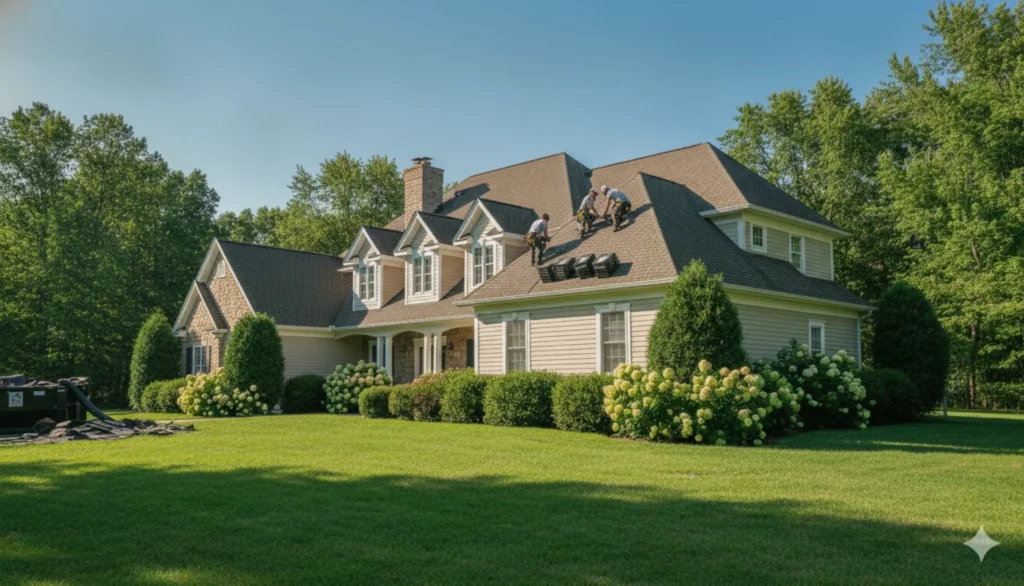
That said, “summer is a good time” isn’t the whole story. Albany’s summer has its own quirks—afternoon thunderstorms that roll in fast, heat that affects how shingles behave during installation, and a scheduling window that fills up faster than most homeowners expect. Understanding how those factors work together helps you make a smarter decision and get more out of a significant investment.
This guide walks through why summer is one of the strongest seasons on the Capital Region roofing calendar, what to watch for, and how to make the most of the season—whether you’re planning ahead or dealing with something that can’t wait.
Quick Answer: Summer is one of the best times to replace a roof in Albany, NY. Warm temperatures activate shingle sealant adhesives, long days allow faster completion, and replacing in summer gives your new roof months to settle before winter. Book in April or May—quality contractors in the Capital Region fill summer schedules quickly.
How Albany’s Climate Shapes the Roofing Calendar
Albany’s four-season climate is genuinely demanding on roofs—and that same climate is what makes the season you choose matter more here than it would in a milder part of the country.
Albany’s Weather by Season: What It Means for Your Roof
Albany sees quick temperature drops in October, persistent wind in March, and humid bursts in July—each of which creates specific challenges for roofing installations. Here’s how the seasons compare for Capital Region homeowners:
| Season | Albany Temp Range | Key Advantage | Key Challenge |
| Summer (Jun–Aug) | 70–92°F | Optimal shingle sealing, 14+ hour days, dry windows | Afternoon thunderstorms, peak scheduling demand |
| Fall (Sep–Oct) | 45–70°F | Ideal installation temps, close to winter deadline | High demand, schedules fill early, early frost risk |
| Spring (Mar–May) | 35–65°F | Getting ahead of summer demand | Persistent rain, cold snaps, unpredictable conditions |
| Winter (Dec–Feb) | 15–35°F | Lower demand, faster availability | Adhesive activation issues, safety concerns, short days |
Summer and fall are both legitimate roofing seasons in Albany—and experienced contractors throughout the Capital Region recognize both as strong windows. According to the Asphalt Roofing Manufacturers Association (ARMA), asphalt shingles perform best when installed between 40°F and 85°F—a range Albany’s summer comfortably occupies for most of the season.
What Makes Summer Stand Out
Summer’s edge over fall in Albany comes down to three practical advantages: shingle sealant activation, scheduling availability, and the amount of time your new roof has to fully settle before winter arrives. Fall is excellent—but it’s also the season every homeowner waits for, which means the best contractors book up faster and your new roof goes into winter with less curing time behind it.
Is Summer a Good Time to Replace a Roof in Upstate New York?
Yes—and the reasoning is grounded in how roofing materials actually behave, not just general seasonal preference.
Why Warm Temperatures Help Asphalt Shingles
Every asphalt shingle has a self-sealing adhesive strip on its underside. When heat activates that strip, it bonds to the shingle below it—creating the weather-tight, wind-resistant layer your roof depends on. In Albany’s summer temperature range of 70–92°F, that activation happens reliably and relatively quickly after installation.
In fall installations completed in late October, the cooling temperatures may slow that sealing process—meaning shingles are technically installed but not fully bonded when the first significant weather arrives. Summer installations don’t have that problem. Your new roof goes into fall and winter with weeks or months of proper bonding already behind it.
The Daylight Advantage
Summer days in Albany run over 14 hours. A crew starting at 7:00 AM has a substantial working window—enough to complete most standard residential replacements in a single long day. For you, that means less time with your home exposed during installation, fewer overnight exposures, and faster project completion overall.
How Albany’s Summer Heat Affects Roof Installation
One of the most common questions we hear from Capital Region homeowners is whether summer heat causes installation problems. It’s a fair question—and the honest answer is more reassuring than most people expect.
The Honest Answer on Heat and Shingles
Albany’s typical summer range is well within the optimal installation window for asphalt shingles. Temperatures above 95°F can cause shingles to soften and become more susceptible to scuffing during installation—but sustained extreme heat is uncommon in the Capital Region. When those days do occur, experienced crews adjust: starting earlier in the morning, taking care with foot traffic on freshly installed shingles during afternoon hours.
Moderate summer heat is actually a feature, not a bug, for roof installation. The warmth activates the sealant adhesive. Albany’s summer sits comfortably in the middle of the optimal range—warm enough to seal properly, rarely extreme enough to cause handling problems.
What to Ask About Heat Management
If you’re installing during a stretch of particularly hot weather, ask your contractor how they handle high-temperature days specifically. Do they start earlier? Do they adjust foot traffic protocols on the roof? A contractor with a clear, practiced answer to that question is one who takes the details seriously—and those details matter when you’re making a 25-year investment.
How Summer Storms in Albany Affect a New Roof Installation
Albany’s summer weather pattern includes a specific phenomenon worth understanding: afternoon convective thunderstorms. These are fast-developing, often intense storms that typically build between 2:00 PM and 6:00 PM on warm, humid days from June through August.
What Experienced Contractors Do About Storm Risk
The good news is that Albany’s afternoon storm pattern is predictable. Experienced contractors in the Capital Region plan around it. They monitor forecasts closely, stage tarps for quick deployment, and know how to properly secure a roof-in-progress before weather arrives.
The most useful question to ask during your estimate process: How do you handle weather interruptions during installation? The specificity of the answer tells you a great deal about a contractor’s experience and processes.
Storm Interruption vs. Storm Damage
A well-managed installation interrupted by an afternoon storm is not a safety emergency—it’s a routine part of summer roofing in Upstate New York. Competent crews keep tarps staged and secure work-in-progress quickly. Extended exposure over multiple days is the concern to avoid, and summer installations in Albany rarely face that risk because the working windows between storms are generally substantial.
Summer Replacement Helps You Prepare for Albany’s Winters
This is the angle that makes summer replacement most compelling for Albany homeowners specifically—and it’s one that doesn’t get enough attention in most roofing conversations.
What Albany Winters Do to Roofs
Albany typically receives 60 or more inches of snow annually, with some winters bringing significantly more. Ice dams—ridges of ice that form at the eaves when heat escaping from the attic melts roof snow that then refreezes—are a real and recurring problem for Capital Region homes. A roof that’s already compromised, with worn shingles or degraded underlayment, is far more vulnerable to ice dam damage than a recently replaced one.
How a Summer Replacement Addresses Winter Risk
Replacing your roof in summer means your new installation includes fresh ice and water shield at the eaves and valleys—the areas most vulnerable to ice dam infiltration. Your new shingles have months to fully seal and bond before freeze-thaw cycles begin testing them. And you go into fall knowing your roof is solid, rather than hoping it holds through one more winter.
A roof that’s been flagged for replacement but hasn’t been addressed is taking on compounding risk with each season it endures. Ice dams that infiltrate a compromised roof can cause interior ceiling damage, insulation saturation, and wood rot—repairs that cost significantly more than the replacement would have.
What You Need to Know About Permits in Albany
Roof replacements in Albany require building permits—and that’s worth factoring into your timeline.
Albany’s permitting process typically adds a few days to a week to project planning. Established local contractors handle the permitting process as part of their service. Before signing with any contractor, confirm: Do you pull the permit, and is that included in the estimate?
A contractor who handles permitting demonstrates familiarity with Albany’s building requirements and protects you from compliance issues that can affect your home’s value and insurability. It’s a reliable marker of a legitimate, established operation.
What Is the Best Season to Get a New Roof Installed in Albany?
For Albany homeowners with flexibility, here’s how the decision actually breaks down.
If Your Roof Is Failing Now
If your roof has active leaks, visible structural damage, or shingles that allow water infiltration, the best time to replace it is immediately, regardless of the calendar. A failing roof in November is a worse problem than a winter installation. Don’t let waiting for the “right season” allow a roof failure to escalate into interior damage.
If Your Roof Is Aging but Not Actively Failing
For a roof approaching the end of life, summer—particularly June and early July—is an excellent time to install a replacement window. You have time to plan, compare estimates, choose the right crew, and schedule a project that gets done properly in good conditions with maximum settling time before winter.
The Capital Region Roofing Calendar
| Timing | What to Do |
| Late March – April | Get estimates, compare contractors, begin scheduling |
| May – June | Strong early-summer window; book if you haven’t already |
| July – August | Active summer season; excellent conditions, fuller schedules |
| September – October | Fall rush; great temps, tight contractor availability |
| November – March | Possible for urgent situations; more weather-dependent |
Booking a Summer Roof Replacement in Albany: What to Know
Book Earlier Than You Think
For a June or July installation, reach out for estimates in April and plan to make a decision by early May. Quality contractors in the Albany area fill their summer schedules early. Waiting until June or July to begin the process often limits your options to less-established crews or delays your project until fall.
What to Ask Every Contractor
- How do you handle weather interruptions during installation?
- Do you pull the building permit, and is that included in the estimate?
- What underlayment and ice and water shield do you use, and why?
- Can you complete the job in a single day, or will my deck be exposed overnight?
- What’s your workmanship warranty, and how do I access it if I need it?
A contractor who answers these questions clearly and specifically is demonstrating the kind of transparency that makes the difference between a roof that performs for 25 years and one that generates problems in five.
Don’t Let Another Winter Find Your Roof Where It Is Today
Roofs don’t get better on their own. A winter is rarely kind to one that’s already showing its age—and the repair costs that accumulate from a delayed replacement almost always exceed what early action would have cost.
Summer in Albany is your window. The conditions are right, the days are long, and the investment you make now goes into fall and winter with its best possible footing. Whether your roof is clearly at end-of-life or you’re simply thinking ahead, the summer season is the right time to have the conversation.
The best first step is the same as always: an honest inspection from someone who will tell you what your roof actually needs—not what generates the largest invoice.
About Star Roofing
Star Roofing was founded in 1997 by the Wall and Fedele families and has been a trusted name in the Capital Region ever since. As a second-generation, family-owned company, Star is built on three straightforward principles: do the job right, treat people with respect, and stand behind every roof installed. Their highly trained crews serve residential and commercial customers throughout the Albany area with honest assessments, quality materials, and the kind of care that comes from knowing your neighbors are your customers. Reach out today—they’d love to help you move forward with confidence.