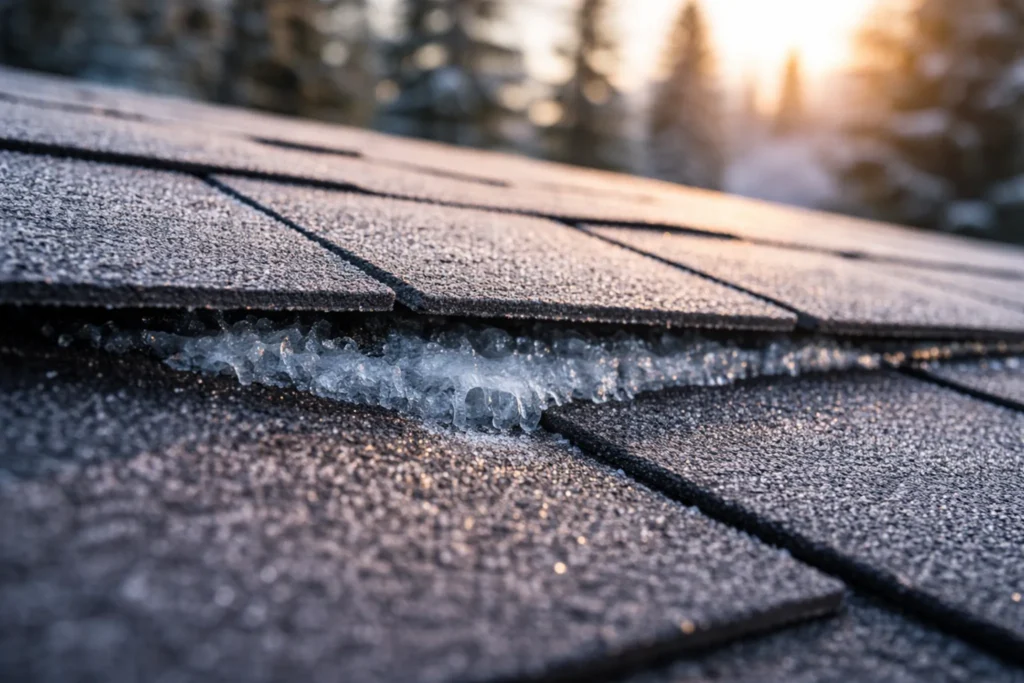
Freeze-thaw cycles are one of the most destructive—and least understood—forces acting on your roof every winter. Unlike a sudden storm that announces itself with wind and noise, this damage is quiet, cumulative, and easy to miss until it’s already expensive.
If you live somewhere that experiences real winters, your roof is quietly fighting a battle you probably never think about. It’s not the dramatic kind. This one is slow, repetitive, and relentless. Over the course of a single winter, freeze-thaw cycles can subject your roof to dozens of episodes of expansion and contraction that gradually weaken even a well-built, well-maintained roof.
We know how stressful it can be to discover damage you didn’t see coming. The good news is that understanding how this process works puts you ahead of most homeowners. When you know what to look for, you can catch problems early, before a minor repair turns into a major expense. That’s exactly what this guide is here to help you do.
What Is a Freeze-Thaw Cycle?
A freeze-thaw cycle occurs when water—from rain, snowmelt, or humidity—seeps into small cracks or gaps in your roofing materials. When temperatures drop below 32°F, that water freezes. When temperatures rise, it thaws. Simple enough. But the damage that results from this process is anything but simple.
The Science Behind the Damage
Here’s the part most people don’t know: water expands by approximately 9% in volume when it freezes. That might not sound like much, but inside a rigid material—like an asphalt shingle, a mortar joint, or a flashing seal—that expansion generates enormous outward pressure. There’s nowhere for the material to go, so it cracks, lifts, or separates instead.
Think of it like a can of soda left in the freezer. The liquid expands, and something has to give. On your roof, “something” is the very material standing between your family and the elements.
How Often Does It Happen?
This surprises most homeowners: in many cold-weather regions, a single winter can bring 30 to 50 or more individual freeze-thaw events. The damage isn’t driven by prolonged deep freezes—it’s driven by the back-and-forth. Those transitional days in early winter and late spring, when temperatures swing between freezing and above-freezing within a single 24-hour period, are often the most destructive. Every cycle widens existing cracks a little more, loosens a fastener a little further, and chips away at your roof’s ability to protect your home.
Which Parts of Your Roof Are Most Vulnerable?
Freeze-thaw damage isn’t uniform. Some components of your roof take the brunt of it more than others, and knowing which ones to watch can help you spot trouble before it becomes a crisis.
Shingles and the Decking Beneath Them
Asphalt shingles become more brittle in freezing temperatures, which makes them more susceptible to cracking under the pressure of expanding ice. When water works its way beneath a shingle and freezes, it can lift, curl, or crack the shingle—and in doing so, it also works the fasteners loose. Over time, you’ll notice shingles that appear uneven or have shifted out of their original alignment. That’s not a cosmetic issue; it’s a sign the expansion-contraction process has physically moved them.
Beneath the shingles, the roof deck can absorb moisture and begin to weaken, especially if the underlayment has already been compromised by previous cycles.
Flashing Around Chimneys, Vents, and Skylights
Flashing is the thin metal material that seals the joints where your roof meets vertical structures—chimneys, pipes, skylights, and dormers. It’s one of the most critical (and most overlooked) components of your entire roof system. Because metal naturally expands and contracts with temperature changes, repeated freeze-thaw cycles gradually work flashing loose, breaking the seal, and creating gaps where water can enter. Once flashing fails, water intrusion is almost inevitable—and it tends to happen in exactly the spots that are hardest to notice from the ground.
Gutters and Drainage Systems
Your gutters don’t just collect rainwater; they manage the runoff from every snowmelt event throughout the winter. When ice builds up inside gutters, it creates a blockage that causes water to back up onto the roof. Over time, the weight of that ice can physically pull gutters away from the fascia board, damaging both the gutters and the edge of the roof itself. And when gutters fail, water has nowhere to go but down—often into your foundation or basement. It’s one of those problems that starts on the roof and ends up much further into your home than you’d expect.
Masonry Elements—Chimneys and Brick
Brick and mortar are naturally porous, which means they absorb water readily. When that water freezes inside the masonry, it causes spalling—a process where the surface of the brick flakes and breaks away. Over multiple winters, this can quietly compromise the structural integrity of your chimney. Cracks in the mortar joints can also allow water to bypass the chimney flashing entirely and travel directly into the roof structure below.
Does Roof Pitch or Age Make It Worse?
Two factors that most freeze-thaw articles never address: roof slope and roof age—and both matter more than most people realize.
Low-slope or flat roofs are significantly more prone to water pooling, which means more standing water available to seep into cracks and freeze. Steeper roofs shed water and snow more readily, reducing exposure—but they’re not immune.
Age matters enormously. A newer roof with intact shingles, sealed flashing, and fresh underlayment has considerable resistance to freeze-thaw stress. An aging roof—especially one within a few years of the end of its expected lifespan—is exponentially more vulnerable. The granules that protect asphalt shingles have worn down, the sealant strips have dried out, and even small amounts of water infiltration can accelerate serious deterioration. If your roof is getting up there in years, winter is the season to pay closest attention.
How Freeze-Thaw Cycles Cause Roof Leaks
Material damage is one thing. But the real fear for most homeowners—and understandably so—is what comes next: water inside the house.
The Ice Dam Problem
Ice dams are one of the most common—and most damaging—consequences of freeze-thaw cycles, and they’re worth understanding in detail. Here’s how they form: heat escaping from your living space warms the upper portion of the roof, melting the snow sitting on it. That meltwater runs down toward the eaves, where the roof is colder because it’s not above a heated living space. There, it refreezes, forming an ice dam that blocks further drainage.
Water backs up behind the dam. It sits there, under the snow, with nowhere to go but sideways—and eventually, under your shingles. That’s when leaks begin. Ice dams can also wrench gutters completely out of position, compounding the drainage problem and causing additional structural damage that isn’t always obvious until spring.
How Water Finds Its Way Inside
By the time you see a water stain on your ceiling, the damage has usually been building for weeks. We hear this from homeowners all the time—they had no idea anything was wrong until one morning they noticed a stain or felt a drip. The pathway typically goes like this:
- A shingle is cracked or lifted by ice expansion
- Water gets beneath the shingle and soaks the underlayment
- The saturated underlayment fails to redirect water away from the deck
- The roof deck absorbs moisture and begins to soften or rot
- Water follows the path of least resistance into your attic
- Eventually, it appears as a stain—or a drip—on your ceiling
Each step in that chain is an opportunity to catch the problem early—which is exactly why knowing the warning signs matters so much.
Warning Signs of Freeze-Thaw Damage to Watch For
You don’t need to climb on your roof to spot many of the early indicators of freeze-thaw damage. Here’s what to look for from the ground, from inside your attic, and throughout your living space. It’s worth sharing this list with anyone else in your household who might be the first to notice something.
Exterior Warning Signs
- Cracked, curling, or missing shingles—especially after a period of alternating freezes and thaws
- Uneven shingle spacing—a sign that expansion and contraction have shifted shingles out of alignment
- Visible gaps or lifted sections in the flashing around chimneys, vents, or skylights
- Sagging, detached, or overflowing gutters—often a sign of ice buildup
- Ice dams along the eaves—visible ridges of ice at the roof’s edge
- Granule loss—if you notice a buildup of small, gritty particles in your gutters or at the base of downspouts, your shingles are deteriorating and may need attention sooner than you think
Interior Warning Signs
- Water stains or discoloration on ceilings and upper walls
- Cracking or popping sounds during rapid temperature changes—often the sounds of roofing materials and structural wood responding to thermal expansion and contraction. Many homeowners assume these sounds are normal settling. They’re worth investigating.
- Musty odors coming from the attic—a strong indicator of moisture accumulation
- Visible mold or mildew in the attic space
The Hidden Danger—Mold and Air Quality
This one deserves its own moment of attention because it’s the consequence most homeowners don’t think about until it becomes a serious problem—and by that point, it’s both costly and stressful to address.
When moisture enters your attic through freeze-thaw-damaged roofing, it creates an environment where mold thrives. Mold spores don’t stay in the attic—they circulate through your home’s air. For households with children, elderly residents, or anyone with asthma or respiratory sensitivities, this is a genuine health concern, not just a structural one. Addressing moisture intrusion promptly isn’t just about protecting your property—it’s about protecting the people you care about most.
The Long-Term Cost of Ignoring Freeze-Thaw Damage
We understand that roof repairs aren’t always at the top of the budget priority list. But here’s the financial reality that the “wait and see” approach tends to produce, and it’s worth taking seriously:
| Problem Caught Early | Approx. Repair Cost | Same Problem Left Unaddressed | Potential Cost |
| Loose or cracked flashing | $150–$400 | Water-damaged roof deck + interior | $2,000–$8,000+ |
| A few lifted shingles | $200–$500 | Structural rot + mold remediation | $5,000–$15,000+ |
| Ice dam removal | $400–$1,000 | Ceiling, insulation, drywall repair | $3,000–$10,000+ |
| Gutter reattachment | $150–$300 | Foundation water damage | $5,000–$30,000+ |
*Cost ranges are general estimates based on national averages and will vary by region, roof size, and project scope. Contact your local roofing professional for an accurate assessment specific to your home.
The pattern is consistent and hard to ignore: small problems caught early are inexpensive. The same problems left unaddressed are not. A professional inspection costs a fraction of what reactive repairs do—and it gives you the peace of mind of knowing exactly where things stand.
How to Protect Your Roof from Freeze-Thaw Damage
Prevention is almost always more affordable—and far less stressful—than repair. Here are the most effective steps you can take to reduce your roof’s vulnerability to freeze-thaw cycles.
Improve Attic Insulation and Ventilation
This is the single most impactful thing most homeowners can do, and it’s often more accessible than people expect. The root cause of ice dams is an uneven roof-surface temperature—and that unevenness is driven by heat escaping from your living space into the attic. Proper insulation keeps that heat where it belongs. Proper ventilation—with intake vents at the soffits and exhaust vents at or near the ridge—keeps the roof deck uniformly cold, so snow doesn’t melt unevenly and refreeze at the eaves.
The U.S. Department of Energy recommends specific R-values for insulation based on your climate zone. If your attic insulation is aging or inadequate, addressing it before winter is one of the smartest investments you can make—for your roof and your heating bills.
Install Ice and Water Shield Underlayment
Most homeowners have never heard of ice-and-water barrier underlayment—but it could save them thousands of dollars, and it’s worth asking about at your next inspection. Ice-and-water shield is a self-adhering, waterproof membrane installed beneath the shingles along the eaves, in roof valleys, and around penetrations such as chimneys and vents. If water ever gets beneath the shingles, the barrier redirects it rather than allowing it to soak into the deck.
Building codes in many cold-climate regions—specifically IRC Climate Zones 5 through 8—require this product at eave edges, but a thorough installation extends it further up the roof for greater protection. If your home was built before this product was widely used, it’s well worth discussing with a roofing professional.
Keep Gutters Clean and Functional
Clean gutters are essential for managing winter runoff, and this is one maintenance task homeowners can realistically stay on top of. Clogged gutters trap water at the roof edge, accelerating ice dam formation and adding dangerous weight. Clean your gutters every fall before the first freeze—and if you’re in a heavily wooded area, consider gutter guards to reduce buildup between cleanings. Make sure downspouts direct water well away from your foundation.
Safe Snow Removal
After a significant snowfall, removing accumulated snow from your roof reduces the amount of meltwater available to infiltrate cracks and form ice dams. A roof rake—used from the ground—is the safest tool for this job. Work from the edge upward, pulling snow down and away from the roof.
A few important cautions to keep in mind:
- Never use a metal-edged tool on your shingles—the granules that protect asphalt shingles are easily scraped off, and the damage isn’t reversible
- Don’t climb on your roof in winter conditions—the combination of ice and slope is genuinely dangerous, and no repair is worth the risk
- For significant ice dams or heavy accumulation, call a professional—it’s the safest and most effective approach
Schedule Professional Roof Inspections
At minimum, have your roof professionally inspected once a year—ideally in late fall before the freeze-thaw season begins, and again in early spring to assess any damage that accumulated over winter. A trained eye catches things that simply aren’t visible from the ground: compromised underlayment, subtly lifted flashing, early-stage shingle cracking, and attic moisture issues that haven’t yet appeared as interior stains.
Think of a roof inspection the same way you think of a car service. You don’t wait until the engine fails—you get it checked regularly so small issues don’t quietly become big, expensive ones. TheInsurance Institute for Business & Home Safety (IBHS) recommends regular professional roof evaluations as one of the most effective ways to reduce weather-related home damage.
What to Do If You Already Have Freeze-Thaw Damage
If you’re reading this and already suspecting your roof has taken some hits this winter, first—don’t panic. Most freeze-thaw damage, when caught reasonably early, is very manageable. Here’s the practical path forward.
Address Problems Early Before They Escalate
The moment you notice a warning sign—a water stain, a sagging gutter, a visible gap in the flashing—don’t wait for the next inspection cycle. We know life gets busy, but this is one of those situations where acting quickly really does make a significant difference. As the cost table above illustrates, the gap between “minor repair” and “major restoration” is often just a matter of weeks.
Key Takeaways—What Every Homeowner Should Remember
Winter weather is tough, but freeze-thaw cycles are a uniquely damaging force because they’re cumulative, largely invisible until damage is already advanced, and can affect every component of your roof simultaneously. The good news—and we mean this genuinely—is that, with the right knowledge and support, this damage is largely preventable, or at least very manageable.
To recap the essentials:
- Water expands 9% when it freezes—enough to crack, lift, and separate rigid roofing materials
- 30–50+ freeze-thaw cycles per winter is normal in many cold-climate regions
- Shingles, flashing, gutters, and masonry are the most vulnerable components
- Ice dams are the most common cause of freeze-thaw-related leaks
- Attic insulation and ventilation are your most powerful preventive tools
- Catching damage early is dramatically less expensive than reactive repair
- Annual professional inspections are the single best investment you can make in your roof’s longevity
Star Roofing—Local Expertise You Can Count On All Winter Long
At Star Roofing, we live and work in the same communities as our customers—and that means we take winter roof damage personally. We’ve seen firsthand what freeze-thaw cycles can do to roofs in our area, season after season, and we’ve helped countless local homeowners and business owners get ahead of the problem before it becomes a crisis. When you call us, you’re not talking to a call center—you’re talking to neighbors who genuinely care about the outcome.
We’re a family-owned and operated company built on a foundation of integrity, quality, and genuine respect for every home we touch. Our highly trained crews bring deep local knowledge to every inspection and repair—because experience with your specific climate matters in ways that general roofing knowledge simply can’t replicate. We serve both residential and commercial properties, and we back every job with the kind of unparalleled customer service that earns long-term relationships, not just one-time transactions.
Whether you’ve noticed a warning sign this winter, want a professional assessment before the next freeze-thaw season begins, or simply want the peace of mind of knowing your roof is ready for whatever winter brings—we’re here, we’re local, and we’re genuinely happy to help.
Ready to protect your roof? Reach out to Star Roofing today to schedule your inspection or talk through your options. We stand behind every roof—because we built our reputation one home at a time, right here in your neighborhood. We take every job personally, because we live here too.