There’s something almost magical about a winter snowfall. The neighborhood goes quiet, everything looks clean and bright, and for a little while, it feels like the world has hit pause. But while you’re watching the snow pile up from the warmth of your living room, your roof is out there doing some of the hardest work of its life.
Snow and ice are two of the most relentless forces a roofing system can face. The weight, the freeze-thaw cycle, the ice that creeps under shingles—it all adds up quietly, and by the time the last storm has passed, the damage may already be done.
The good news? Your roof almost always leaves clues. And if you know what to look for, you can catch problems early—before a small repair becomes a major expense, before a slow leak becomes a structural issue, and before next winter makes things worse. This guide walks you through every warning sign, explains what’s happening beneath the surface, and tells you exactly what to do next.
How Snow and Ice Actually Damage Your Roof
Most homeowners think of snow as frozen precipitation that eventually melts and goes away. For your roofing system, though, snow and ice are working against it in several ways at once—and the damage is almost always cumulative.
The Weight Problem: Snow Load and Your Roofing System
Every roof is engineered to handle a certain amount of downward pressure, known as snow load. Most residential roofs are designed to withstand a baseline of around 20 pounds per square foot, though this varies based on roof design, age, and regional building codes.
Here’s where things get complicated: not all snow weighs the same.
| Snow Type | Approximate Weight per Square Foot |
| Light, powdery snow | ~5 lbs |
| Settled/compacted snow | ~10–15 lbs |
| Wet, dense snow | 20+ lbs |
| Ice (1 inch) | ~5 lbs |
When multiple storms pile up without a significant thaw between them, that weight compounds quickly. Add a layer of ice beneath it all, and your roof is under the kind of sustained stress it was never meant to handle indefinitely.
The Freeze-Thaw Cycle and Why It’s So Destructive
Even a relatively mild winter—without a single major blizzard—can cause serious roof damage, thanks to the freeze-thaw cycle. Here’s how it works: during the day, temperatures rise just enough to partially melt snow on the roof surface. At night, that meltwater refreezes. And when water turns to ice, it expands with tremendous force.
This repeated expansion and contraction does a few damaging things:
- Cracks and lifts shingles, creating gaps through which water can work its way under
- Widens existing micro-cracks in flashing, sealants, and roofing materials that were already showing their age
- Forces moisture deeper into the roof decking and underlayment with every new cycle
Older roofing materials that have lost their flexibility are especially vulnerable here. A roof that sailed through last winter may not fare as well after several more seasons of this kind of stress.
Warning Signs of Ice Dams You Shouldn’t Ignore
Of all the winter roof hazards, ice dams are among the most common—and honestly, the most misunderstood. Understanding what they are and what they’re doing to your roof can make a real difference.
An ice dam forms when heat escaping from your attic warms the upper portion of the roof deck, melting the snow above it. That meltwater runs down toward the colder roof edges—where it refreezes, building up a ridge of ice that traps more and more water behind it. It’s a cycle, and it doesn’t stop until temperatures stay warm long enough to melt everything through.
What Ice Dams Look Like From the Outside
- Large icicles hanging from your gutters or along the roof’s edge
- A visible ridge or shelf of ice running along the lower roofline
- Uneven snow coverage—patches that have melted away faster than the areas around them (this indicates heat escaping from below)
- Gutters that look weighed down, bent, or are beginning to pull away from the fascia
What Ice Dams Are Doing to Your Roof Underneath
Here’s the part that’s easy to miss—and the part that matters most. The water trapped behind an ice dam has nowhere to go except backward, up under your shingles. From there, it infiltrates the underlayment, saturates the roof decking, and eventually makes its way into your attic and living spaces.
By the time you notice a water stain on your ceiling, that ice dam may have been quietly doing damage for weeks. This is why catching the exterior signs early is so important.
Exterior Warning Signs of Roof Damage After Snow and Ice
Once a significant winter storm has passed, take some time to walk around the outside of your home and do a careful visual inspection from the ground. You don’t need to get on the roof—and you shouldn’t. Here’s what to look for.
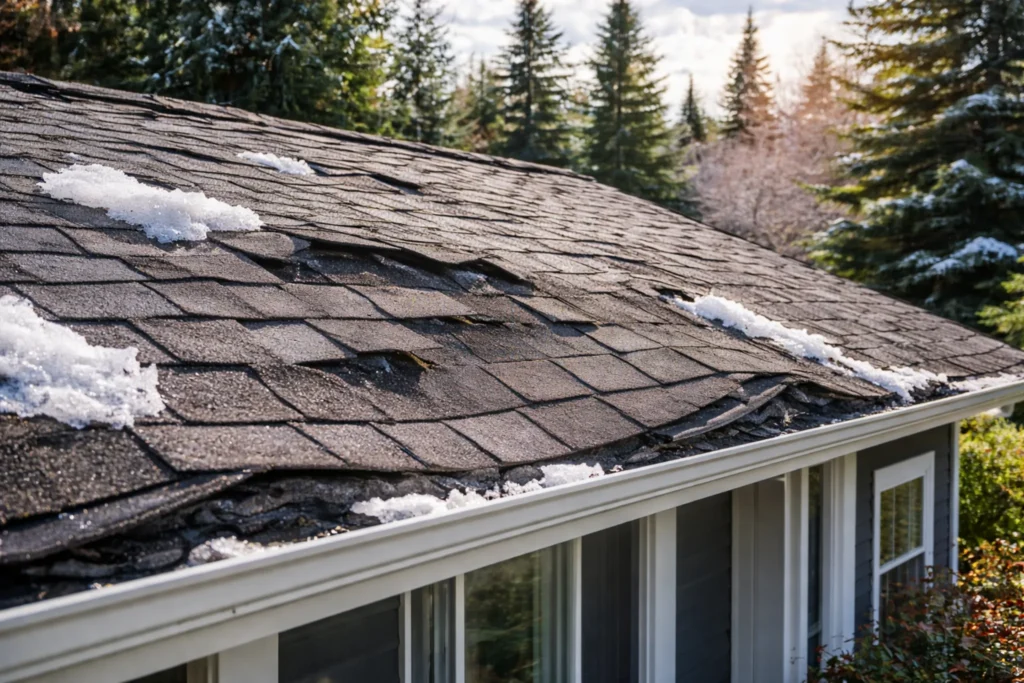
Missing, Cracked, or Curling Shingles
Heavy snow and ice can dislodge shingles outright or crack them from the combined stress of weight and temperature swings. From ground level, watch for:
- Bare patches where shingles are missing entirely
- Shingles in your yard, driveway, or gutters
- Visibly curled or buckled edges along rows of shingles
- Dark streaks or thin spots where granules have been worn away or displaced
Exposed underlayment is a time-sensitive issue. Once that protective layer is compromised, water has a much more direct path into your roof structure—and from there, into your home.
Sagging Roofline or Uneven Roof Surface
If your roofline appears to bow, sag, or dip in areas where it used to run straight, that’s a serious structural warning sign. It typically means the roof decking beneath the shingles has absorbed moisture and weakened, or that it’s bearing more load than it was designed to handle.
Don’t wait on this one. A sagging roof is one step away from potential structural failure—and in worst-case scenarios, partial roof collapse. If something looks wrong, trust your instincts and make that call.
Damaged or Pulled-Away Gutters
Ice buildup at the edge of your roof puts enormous, sustained strain on your gutters. After a tough winter, take a close look for:
- Gutters pulling away from the fascia board
- Bending, cracking, or visibly sagging sections
- Areas where gutters have fully detached
Damaged gutters aren’t just a drainage problem—they’re often a signal that the roof edge and the fascia beneath them have taken a hit as well.
Flashing Damage Around Chimneys, Vents, and Skylights
Flashing—the thin metal strips that seal the transitions between your roof and penetrations like chimneys, pipe vents, and skylights—is one of the most vulnerable parts of a winter roof. Temperature swings cause metal to expand and contract repeatedly throughout the season, loosening seals and opening up gaps over time.
Look for:
- Lifted, bent, or cracked flashing
- Rust or visible corrosion along metal sections
- Gaps or separation where flashing meets the roof surface or chimney base
Compromised flashing is one of the most common entry points for water intrusion—and one of the most frequently overlooked spots during a self-inspection.
Interior Warning Signs of Snow and Ice Roof Damage
Some of the clearest evidence of winter roof damage shows up inside your home. If you know where to look, you can often catch a problem before it has a chance to spiral into something much more serious.
Water Stains on Ceilings or Walls
Brown, yellow, or grayish staining on your ceilings or upper walls is a near-certain sign that moisture is getting in from above. One thing many homeowners don’t realize: water travels before it drips. The stain appearing in your upstairs hallway may actually originate from a roof leak on the opposite side of the house.
After any significant snowmelt event, check your upper-floor rooms carefully. And please—don’t brush off a small stain as no big deal. Small stains have a way of becoming large ones.
Signs of Damage in the Attic
Your attic is often the first place roof damage reveals itself, and it’s one of the most commonly overlooked spaces in a home. After a heavy storm or a significant thaw, take a flashlight up there and look for:
- Damp or compressed insulation (wet insulation loses most of its thermal value and creates ideal conditions for mold)
- Daylight visible through the roof boards—if you can see the sky, water can get in
- Frost or ice on the underside of the roof deck, which signals poor attic ventilation and is a direct precursor to ice dam formation
- Wet or stained sheathing along the ridge or near the eaves
Sticking Doors and Windows, Cracked Drywall
This one surprises many homeowners. When a roof bears excessive weight from snow and ice, it can create subtle but measurable shifts in the home’s structural framing. Watch for:
- Doors or windows that suddenly stick or won’t close the way they used to
- New cracks in drywall, especially in upper corners or running along ceiling lines
- Popping, cracking, or creaking sounds coming from the ceiling or roof structure
That last sign deserves special attention. Audible structural stress is an emergency signal. If you hear your roof popping or groaning under snow load, get your family out of the house and call a professional immediately. This is not the time to wait and see.
Mold Growth and Musty Odors
Moisture from ice dam infiltration or a slow roof leak doesn’t just evaporate when temperatures rise. In attic spaces and wall cavities, it can linger for a long time—creating exactly the conditions that mold and mildew need to take hold.
Signs that mold may be present include:
- A persistent musty smell in upper rooms or when you open the attic hatch
- Visible dark spotting on attic insulation, wood sheathing, or framing members
- Unexplained allergy or respiratory symptoms among people in your household
It’s worth remembering that mold is almost always a sign that water damage has been present for some time—not just since the last storm. If you’re finding mold, there’s likely a moisture pathway that needs to be addressed at the roof level.
Factors That Make Your Roof More Vulnerable to Snow and Ice Damage
Not all roofs face winter the same way. Several factors can make yours significantly more susceptible—and knowing where your home stands can help you make smarter decisions before the next cold season arrives.
Roof Age and the Condition of Roofing Materials
As shingles age, they lose the flexibility that helps them shed water and withstand temperature stress. Granule loss accelerates UV degradation, and any areas that have been previously repaired are inherently weaker than the surrounding original material. A roof that’s 15–20 years old or older should be professionally inspected before each winter season—not just after.
Roof Pitch and Design
Low-slope roofs and flat sections hold onto snow and ice far longer than steeper pitches, which shed accumulation more naturally. Architectural features like valleys, dormers, and roof-level transitions are natural collection points for both snow weight and meltwater—and they’re consistently among the first areas to show winter damage.
Attic Insulation and Ventilation
This is the factor most homeowners don’t consider until they’re already dealing with problems. Poor attic insulation allows heat from your living space to escape through the roof deck, warming the surface unevenly and triggering the freeze-thaw cycle from below. Inadequate ventilation traps warm, moist air in the attic—accelerating wood rot, encouraging mold, and setting the stage for ice dam formation.
Addressing both insulation and ventilation is, hands down, the single most effective way to protect your roof through winter. The U.S. Department of Energy has recommendations for attic insulation levels by climate zone—it’s worth knowing where your home stands.
Is It an Emergency? How to Tell When Roof Damage Requires Immediate Action
One of the most common questions homeowners have after a winter storm is: How urgent is this, really? Here’s a practical breakdown to help you decide.
Act Immediately—Call a Professional Right Away If You Notice:
- Active water dripping or flowing inside the home
- A visibly sagging or bowing roof structure
- Audible popping, cracking, or groaning from the ceiling under the snow load
- Walls that appear to be bowing outward
- Any sign that the structural integrity of your roof may be compromised
Schedule an Inspection Soon (Within Days) If You Notice:
- Water stains on ceilings or walls without active dripping
- Ice dams or significant icicle formations along the roofline
- Missing or visibly damaged shingles
- Damaged or detached gutters
- Flashing that appears lifted, separated, or corroded
Monitor and Address Before Next Season If You Notice:
- Small, dry stains that haven’t changed or grown
- Minor granule loss on shingles
- Slight gutter misalignment without visible separation or pulling
When in doubt, err on the side of calling a professional. A trained roofer can tell the difference between cosmetic wear and structural compromise—and that distinction can save you tens of thousands of dollars.
What to Do After Spotting Warning Signs
How to Safely Inspect Your Roof from the Ground
This point is worth saying clearly: never climb onto a snow- or ice-covered roof. The risk of serious injury is real, and you don’t need to get up there to get useful information. Instead:
- Use binoculars to closely examine the ridge, field shingles, valleys, and flashing from ground level
- Walk the full perimeter of your home, checking the gutters, fascia, and the roof edge as you go
- Head to the attic with a flashlight—it’s the safest and often the most informative inspection you can do on your own
Documenting Damage for Insurance Claims
If you suspect storm damage, documentation is everything—and the time to start is before any cleanup or repairs begin.
- Photograph and video all visible damage, both exterior and interior
- Record the dates of recent storms and note when you first observed each sign of damage
- Review your homeowner’s insurance policy for specifics on winter storm damage coverage
- Keep all receipts for any emergency protective measures or repairs
Most homeowner’s insurance policies cover damage from sudden storm events, but may exclude damage that develops gradually due to deferred maintenance. The sooner and more thoroughly you document, the stronger your claim will be.
When to Schedule a Professional Roof Inspection
Even when you can’t see any obvious signs of damage after a major winter storm, a professional inspection is still worth doing. A qualified roofing contractor will evaluate areas you simply can’t safely access or accurately assess on your own—including the underlayment condition, flashing seal integrity, ridge health, and attic ventilation performance.
According to the National Roofing Contractors Association (NRCA), roofs should be professionally inspected at least twice a year—ideally once in the fall before winter sets in, and once in the spring after it’s over.
How to Protect Your Home and Roof Before the Next Winter Storm
The best winter roof repair is the one you never need to make. Here’s what proactive homeowners do to give their roofs the best chance of coming through winter in good shape:
- Schedule a fall roof inspection before the first snowfall—catch vulnerabilities while they’re still easy to fix
- Clean your gutters thoroughly in late autumn so they’re ready to handle snowmelt drainage
- Address attic insulation and ventilation if your home has a history of ice dam formation
- Use a roof rake to safely clear snow from the lower 3–4 feet of your roof after heavy snowfall, reducing both snow load and ice dam risk
- Avoid pressure washers, sharp tools, and rock salt directly on the roof surface—these methods cause more damage than they prevent
What Winter Taught Us—Key Takeaways for Every Homeowner
Winter roof damage is rarely dramatic in the moment. It’s quiet and incremental—a lifted shingle here, a little moisture there—until one day it isn’t quiet anymore. The homeowners who come through winter in the best shape aren’t necessarily the ones with the newest roofs. They’re the ones who pay attention, act early, and don’t talk themselves out of making that call.
Here’s a quick recap of the warning signs that matter most:
- Ice dams—visible icicles, ridge ice, or uneven snow melt along the roofline
- Missing, cracked, or curling shingles visible from ground level
- Sagging or uneven roofline—treat this as a potential emergency
- Water stains on interior ceilings or walls
- Attic red flags—damp insulation, frost on the deck, stained sheathing, or visible daylight
- Sticking doors and windows, new drywall cracks, or audible structural stress
- Damaged or detached gutters pulling away from the fascia
- Lifted or corroded flashing around chimneys, vents, and skylights
If any of these sound familiar, you already know what to do next.
Star Roofing—Your Local Partner for Winter Roof Inspections and Repairs
We know this isn’t the kind of thing you want to be thinking about. Nobody wakes up hoping to deal with roof damage. But if something in this article made you stop and think “that sounds like my house”—we’re really glad you’re reading this, and we’re here to help.
At Star Roofing, we live and work in the same communities you do. We’re not a call center or a nationwide chain. We’re your neighbors, and when winter hits hard, we know exactly what local homes face—because our own families are dealing with it too. That’s what we mean when we say we take every job personally.
Our highly trained crews bring years of local experience to every project—residential and commercial—whether it’s a post-storm inspection, a targeted repair, or a full roof replacement. We’ve built our reputation on one simple principle: doing the job right. Not the fastest way. Not the cheap way. The right way—with quality materials, skilled craftsmanship, and honest communication from start to finish.
We’re family-owned and operated, and our foundation is built on integrity, reliability, and the kind of customer service that makes people call us back—and refer their neighbors. We respect every home we step onto, and we stand behind every roof we touch.
Noticed any of the warning signs in this article? Don’t wait for a small issue to become a major repair bill. Contact Star Roofing today to schedule your post-winter roof inspection. Our team is ready to take a look, give you straight answers, and help you protect the home you’ve worked so hard to build.