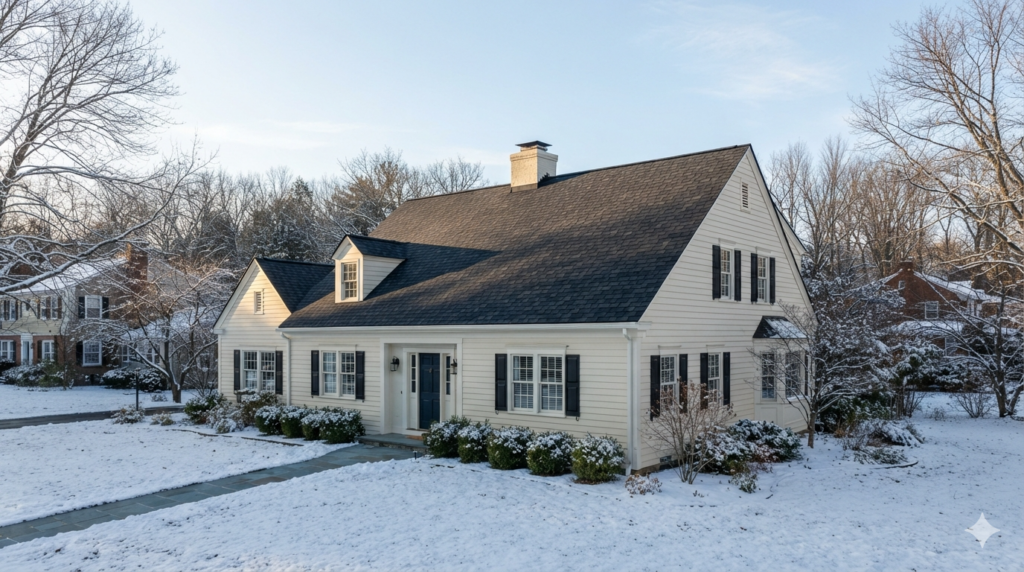
The first real cold snap has a way of making roof problems feel urgent. Maybe a November windstorm took a few shingles, or a new water stain just appeared on the ceiling. Or maybe your roof is near the end of its life, and you’re wondering if it can make it to spring. Whatever brought you here, the question is the same: can a roof be repaired in cold weather, or does everything have to wait until it warms up?
The good news is that winter doesn’t shut roofing down. It changes how the work gets done. Drawing on years of residential and commercial roofing experience in the Capital Region, here’s an honest look at what’s possible, what’s risky, and how to make the right call for your home or building.
| Quick Answer: Yes. A roof can be repaired in cold weather, and full replacements are possible too, with the right precautions. Asphalt shingles handle best above 40°F, and below that, crews warm materials, hand-seal shingles, and work only on dry, snow-free decks. Rain, active snowfall, and ice are what truly put roof work on hold. |
Can a Roof Be Repaired in Cold Weather?
In most cases, yes, and waiting is often the riskier choice. A missing shingle or lifted flashing edge won’t stay small once snow piles up and melts against it. Repairs are contained jobs, so they adapt well to the cold: replaced shingles can be hand-sealed with roofing cement until warmer weather completes the bond, as the Asphalt Roofing Manufacturers Association (ARMA) recommends. Common winter repairs include missing or wind-lifted shingles, loose flashing around chimneys and vents, and small leaks.
Emergency Repairs and Temporary Protection
When winter delivers something bigger, like a fallen branch or a sudden active leak, Owens Corning notes that contractors can place emergency tarps over damaged areas and make permanent repairs once the weather allows. Emergency roof repair is about stopping the water first and doing the lasting fix right.
Is It a Roof Leak or an Ice Dam?
Not every winter drip means your roof has failed. Ice dams need three things, according to the University of Massachusetts Amherst: snow on the roof, heat that melts it, and cold that refreezes it at the eaves. Meltwater then pools behind the ice and backs up into the building. If a leak shows up alongside a thick band of ice at the roof edge, the long-term fix may involve attic insulation and ventilation as much as the roof itself.
Can You Replace a Roof in the Winter?
Yes. ARMA notes that asphalt shingles have been used successfully in cold climates for more than a century. A winter roof replacement simply takes more planning and care, and Owens Corning points out that it may run longer depending on the weather. The challenges come down to two things.
Cold Shingles Get Stiff
Asphalt loses flexibility as temperatures drop, so cold shingles crack more easily when bent or dropped. ARMA also warns that cold shingles that aren’t lying flat can let nails break through, and that an uneven look can get locked in even after warmer weather returns.
The Seal Strip Needs Warmth
Wind testing by the Insurance Institute for Business & Home Safety (IBHS) found that seal strength is the single most important factor in how self-sealing shingles hold up in high winds. That factory adhesive strip needs warmth and sun to activate. Per GAF’s cool-weather guidance, shingles installed in the cold finish sealing naturally once the roof warms; until then, the crew supplies that bond by hand.
What Is the Minimum Temperature for Roofing?
There’s no single cutoff. 40°F is the number you’ll hear most often, but it marks easier installation, not a hard limit. GAF’s technical bulletin on temperature extremes says there’s no practical lower limit for applying its shingles when appropriate precautions are taken. The guidance varies by material:
| Roofing material | Cold-weather consideration |
| Asphalt shingles | Easiest above 40°F; below that, materials are warmed and shingles are hand-sealed |
| Self-adhered ice and water membrane | Won’t adhere to wet or cold surfaces, per CertainTeed’s technical data |
| Metal roofing | No heat-activated seal strip, but crews plan for expansion and contraction (Metal Central) |
| Adhered flat roof membranes | Depends on the adhesive; some are rated to 25°F, others need 40°F+ |
| Mechanically fastened flat roofs | Generally well-suited to cold weather |
What a Capital Region Winter Means for Your Roof
According to National Weather Service climate normals for Albany, the average January high is 32.8°F and February’s is only 36°F. Most winter days here never reach 40°F, so winter roofing in the Capital District isn’t about waiting for a warm spell. It’s about crews who know how to work correctly in the cold we actually get.
Eave protection matters here, too. New York’s residential code requires an ice barrier where ice has a history of forming along the eaves. In Saratoga County, the Town of Stillwater has roofers certify one under Section R905.1.2. That barrier is often a self-adhered membrane that won’t bond to a cold or wet deck, which makes it one of the details a rushed winter job is most likely to miss.
Make the Most of the Late-Fall Window
If you have flexibility, book before the deep cold. Albany’s average high is 49.3°F in November but drops to 38.2°F in December, per the same NWS data. Earlier scheduling gives shingles a better chance to seal and gives everyone more forgiving conditions.
How Experienced Crews Adapt for Cold-Weather Roofing
- Warm, careful handling. GAF recommends storing shingles above 70°F for at least 24 hours before cold-weather installation, then handling them gently on the roof.
- Hand-sealing. Crews apply dabs of roofing cement to hold shingles until spring warmth completes the bond. Owens Corning’s cold-weather bulletin calls for hand-sealing every shingle along the roof perimeter, where wind uplift hits hardest.
- A dry deck, section by section. Owens Corning’s installation instructions call for keeping the deck dry before, during, and after installation, so winter crews often tear off only what they can fully dry in a day.
- Warranty protection. GAF states its warranty isn’t affected when all application instructions, including cool-weather steps like hand-sealing, are followed.
Snow, Rain, and Ice: When Roofing Really Has to Wait
Cold is manageable. Moisture is the bigger issue. Snow and ice must be fully cleared before work begins, since membranes won’t stick to frozen surfaces and snowy roofs are hazardous; OSHA’s winter weather guidance requires fall protection for winter roof work. Rain is a firm stop, too. GAF’s bulletin on buckled felts warns that installing shingles over wet underlayment can cause blistering, buckling, or wrinkling. A crew that pauses to secure the roof and wait for dry conditions is doing it right.
Flat and Commercial Roofs in Winter
Johns Manville notes that mechanically fastened and induction-welded systems perform well in cold weather, while adhered systems depend on the adhesive: water-based products need 40°F or higher for 48 hours, while other EPDM and TPO adhesives are rated down to 25°F and rising. For flat roofing and commercial properties, the right system choice can keep a winter project on track.
Should You Repair Now or Wait for Spring?
Every roof is different, but this framework can help you prepare for an inspection:
| Your situation | What usually makes sense |
| Active leak or storm damage | Repair now, or tarp now and repair when conditions allow |
| A few missing or damaged shingles | Repair now, before snow and ice find the gap |
| Leaks only with ice at the eaves | Have it assessed for ice dams and attic issues |
| Aging roof, no leaks | Assess now; plan replacement for when conditions allow |
| Failing in multiple areas | Talk through a winter replacement; patching may only buy weeks |
What NOT to Do When Your Roof Needs Winter Work
Please don’t climb onto a cold or icy roof. Frost and snow-hidden hazards make winter roofs some of the most dangerous surfaces a homeowner can stand on. A few other things to avoid:
- Don’t wait on a small problem until spring. Melting snow finds gaps that rain never does.
- Don’t chip ice off shingles. Cold shingles crack easily, and you could create the leak you’re trying to prevent.
- Don’t accept installation over snow, ice, or wet surfaces. That shortcut can turn a new roof into a problem roof.
- Don’t panic-buy a replacement. Plenty of winter problems are repairable, and an honest assessment will tell you which you’re facing.
And when you talk to a roofing contractor, ask how they warm and store materials, where they hand-seal, how they keep the deck dry, and how they handle snow or rain mid-project. A great contractor will be glad you asked.
Cold Weather Doesn’t Have to Mean Waiting
The calendar doesn’t decide whether your roof gets fixed. Conditions and craftsmanship do. With a dry deck, properly handled materials, and a crew that knows how to roof through a real Capital Region winter, you can make a confident decision, whether that’s a quick repair this week, a planned roof maintenance visit, or a full replacement before the next big snow.
Your Neighbors Through Every Season
At Star Roofing, we know Capital Region winters because we live through them too. Since 1997, our family-owned company has helped homeowners and business owners across Albany, Saratoga, Schenectady, Rensselaer, and the surrounding counties keep their roofs strong in every season. Our highly trained crews live in the communities they serve, and when you call, you’re talking to neighbors who care about getting it right.
Whether you’ve spotted a problem this winter or just want peace of mind before the next storm, reach out to Star Roofing today for a free consultation and find out why so many local homeowners trust us to stand behind every roof we build. No pressure, no hard sell—just honest answers from people who care about getting it right.