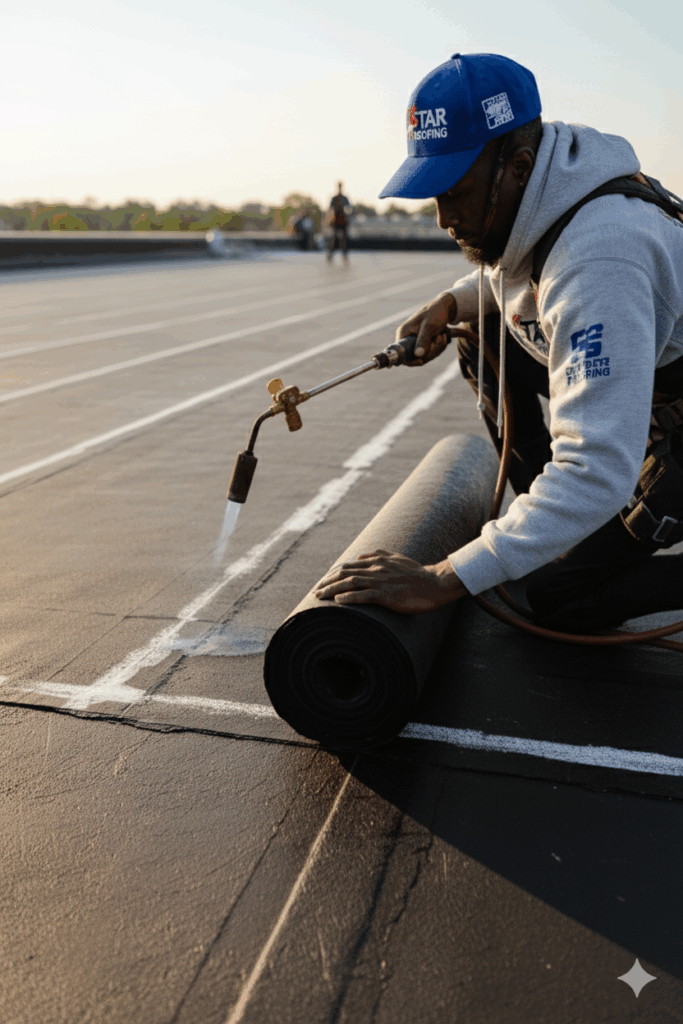
Flat roofs are a clean, modern choice, but when winter weather hits upstate New York, they face a unique set of challenges. Unlike pitched roofs that shed snow naturally, flat and low-slope roofs tend to trap moisture, hold snow in place, and experience more stress from freeze-thaw cycles.
If you own a home or building with a flat roof in the Capital Region, there’s no time like now to make sure it’s ready for what’s coming. Snow, ice, and rapid temperature changes can create leaks, stress your roofing system, and even lead to structural problems if not addressed in time. Let’s look at the most important flat roof maintenance tasks to handle before freezing temperatures move in and how you can protect your property all winter long.
Flat Roofs in Winter are a Tough Combo if You’re Not Prepared
Here’s the thing about winter in New York: it’s not just about cold weather. It’s about the constant up-and-down. Snow and ice arrive one day, melt the next, and then freeze overnight. That constant cycle means your flat roof is expanding and contracting, which wears down materials faster than you might think.
Because water either flows very slowly or not at all on a flat surface, snow and ice tend to pile up. That extra snow load adds excessive weight, while standing water can seep into seams or under the membrane, especially when things start to freeze. If your roof isn’t sealed, drained, and reinforced for winter, you might not notice a problem until spring, and by then, it could be much worse.
Start With a Visual Roof Inspection (Or Schedule a Professional One)
Before the first snowflake hits the ground, give your roof a solid once-over, or have a roofing expert do it for you. You’re looking for soft spots, bubbling, tears in the membrane, or any areas where ponding water has left discoloration or residue. Pay close attention to the seams, flashing, and edges.
If your roof has already been through several winters, it’s even more important to catch issues early. Roof inspections in late fall are the most effective way to catch potential problems before they’re covered in a few inches of snow.
Watch for Ponding Water and Deal With It Now
One of the most common problems with flat roofs is ponding water. Those low, sunken areas where water tends to gather after a rain or thaw. When left alone, these spots turn into shallow ice pools that stress the membrane, increase the risk of cracking, and make spring leaks almost inevitable.
Before winter settles in, any drainage issues should be addressed. A professional can improve slope or install tapered insulation systems to help redirect water. And if there are already signs of damage or wear, don’t wait until ice makes the surface dangerous or impossible to access.
Check for Proper Drainage
Drainage isn’t just about getting the water off the roof, though that’s part of it. It’s also about how efficiently that water gets off the roof. On a flat roof, your gutters and downspouts play a critical role, as do scuppers and internal drains. If any part of that system is clogged or damaged, it only takes one snowstorm followed by a thaw to back up water and send it into your building.
Make sure everything is cleared of leaves, twigs, and debris, especially after fall. And if your building has flat-roof drains that run through the interior, those pipes need to be clear too. Frozen blockages can crack the lines or overflow into the walls.
Evaluate the Condition of the Membrane and Seams
Flat roofs often use materials like EPDM, TPO, or modified bitumen. These materials hold up well under normal conditions but can be stressed by cold temperatures and shifting snow. Over time, seams may pull apart slightly, creating gaps where snow and ice can work their way in.
If your roofing membrane shows signs of bubbling, cracking, or separation around seams or flashing, it’s best to get it patched or resealed before freezing weather makes the work more difficult. Many commercial-grade sealants can be applied even in cold temperatures, but not all repairs are ideal for winter, which makes timing very important.
Don’t Overlook Flashing around Rooftop Units
Most flat roofs support HVAC units, exhaust vents, and other rooftop equipment. These areas are often surrounded by flashing, which is designed to keep water out. But if flashing begins to lift, crack, or separate from the roof surface, it creates an easy path for moisture. Unfortunately, these spots are also tricky because they’re often hidden or hard to inspect. Even a small gap can trap moisture, which expands as it freezes, damaging both the roof and the equipment.
Make Sure the Interior Is Insulated and Sealed
Flat roofs depend on insulation not just to keep the building warm, but to help regulate the temperature difference between inside and outside. When that balance is off, condensation builds up in the roof cavity, which can lead to mold, moisture damage, or premature aging of your roofing system.
A quick way to check for problems is to inspect the interior ceilings for dark spots, peeling paint, or damp patches, especially after snowstorms or warm-ups. Proper insulation also helps reduce heat loss, which in turn prevents ice dam formation at the roof’s edge.
Know When to Remove Snow from Your Roof
This is a big one. When snow accumulates on a flat roof, it doesn’t slide off on its own, it stays until it’s removed or melted. And depending on the snow type, that weight adds up fast. Wet snow can weigh over 20 pounds per square foot. That kind of snow load can push flat roof systems to their limit.
So, should you clear snow off a flat roof? If you’re seeing more than six to eight inches, or if it’s a heavy, wet snowfall, the answer is usually yes. The safest option is to hire a professional snow removal crew trained to work on flat roofs. For homeowners doing it themselves, a long-handled roof rake can be useful, just be careful not to damage the membrane.
Prevent Ice Dams, Yes, Even on Flat Roofs
While pitched roofs are more commonly associated with ice dams, flat roofs aren’t immune. Ice dams form when heat escapes through the roof, melting snow unevenly. That water then refreezes at the edges or over clogged drains, creating dams that trap more meltwater behind them.
On a flat roof, this can lead to water pooling around seams and flashing, soaking the roof deck, and infiltrating the structure. Good roofing maintenance, paired with solid insulation and drainage, is your best defense.
Plan for the Freeze-Thaw Cycle
In the Capital Region, freeze-thaw cycles are constant. Every time snow melts and re-freezes, your roof is shifting slightly, and materials stretch, contract, and strain under the pressure. It’s normal, but over time, it weakens seals and structures. That’s why winter-ready doesn’t just mean snow removal. It means knowing how your roof holds up over time, and giving it the maintenance it needs to survive another season.
Final Thoughts
Flat roofs require more than just a once-over when the seasons change. They need smart planning, early repairs, and the right materials to get through a tough winter. Waiting until snow or ice builds up may limit your options or cost you more in emergency fixes. Taking the time now to inspect, clean, seal, and reinforce your flat roof could save you thousands of dollars and weeks of hassle once the real weather hits.
Why Trust Star Roofing With Your Roof This Winter?
At Star Roofing, we understand winter in the Capital Region because we live here too. We’ve spent decades helping local families and businesses get their roofs ready for everything from sudden snowstorms to long, icy stretches. Our crews know what works in cold temperatures and how to protect your flat roof from stress, leaks, and snow load concerns.
Whether you need a quick inspection, a drainage fix, or help removing snow from your roof, we’re here, and we’re happy to help. Schedule your winter roof check with Star Roofing today. Let’s make sure your flat roof is ready before the snow starts piling up.