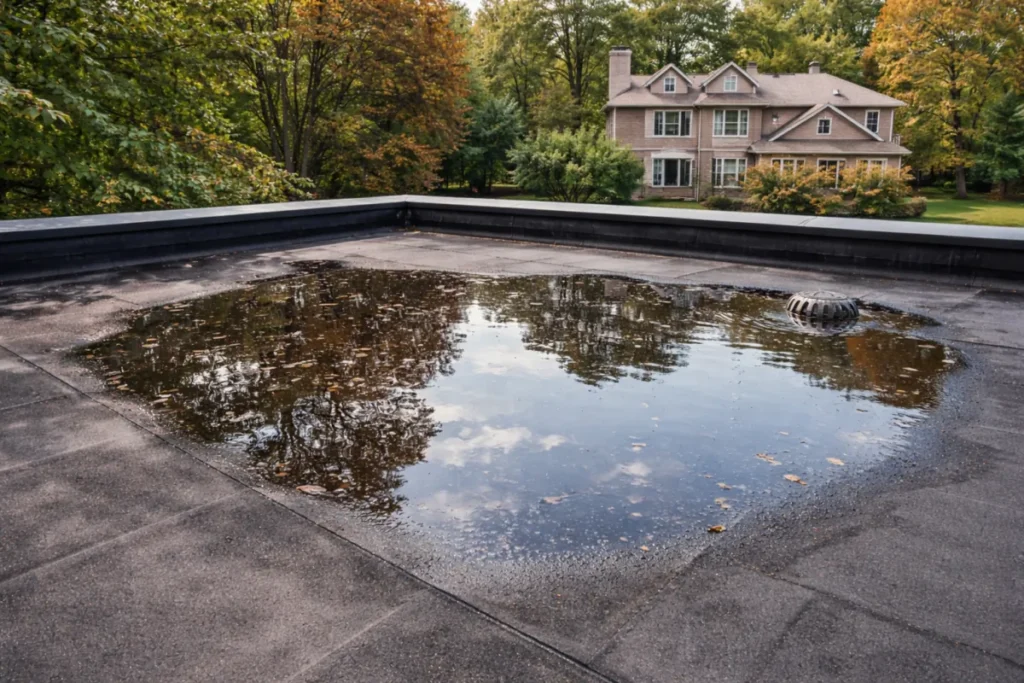
Flat roofs are practical. They’re clean-looking, cost-effective, and common on everything from home additions to large commercial buildings. But they’re not “set it and forget it” systems. Common flat roof problems usually start small. A little ponding water. A minor seam split. A drain that clogs after a storm. Left alone, those small issues can turn into roof leaks, structural damage, and even premature roof replacement. If you own a home or commercial building in New York’s Capital District, here’s what you need to know and what to do next.
Why Flat Roofs Require Special Attention
Flat roofs require a different approach than pitched systems. They don’t shed water quickly. Instead, they rely on proper drainage and well-sealed roof membranes to stay watertight. Are flat roofs more prone to damage? Not necessarily. But they are less forgiving. A sloped roof naturally directs water off the surface. A flat roof depends on internal drains, scuppers, and slight slopes to move water away.
In our region, freeze-thaw cycles add extra stress. Water that lingers on the surface can freeze overnight, expand, and slowly weaken roof materials. High winds during storms can also lift or stress membrane seams, especially on large commercial building structures.
When flat roofs receive proper maintenance, they perform well. When they’re ignored, problems develop faster.
Ponding Water: The Most Common Flat Roof Problem
If there’s one issue we see most often, it’s ponding water. Ponding occurs when water remains on a flat roof longer than it should. Industry professionals typically watch the 48 hours mark closely. If water hasn’t drained within that time frame, it’s a sign of drainage issues.
Why Is Ponding Water a Problem?
Standing water adds weight. It increases wear on roof membranes. Over time, it can lead to leaks and structural deck deterioration. Even a small amount of repeated ponding can lead to water damage beneath the surface. What looks minor today can compromise insulation and decking over time.
What Causes Poor Drainage?
Poor drainage is usually tied to:
- Clogged drains or scuppers
- Debris buildup
- Improper slope
- Structural settling over time
Proper drainage is the foundation of a healthy flat roof. Without it, even high-quality roof materials can fail prematurely.
Why Flat Roofs Leak So Often
Many people ask why flat roof systems seem to lead to leaks more frequently than pitched roofs. The answer usually comes down to seams and penetrations. Flat roof systems rely on sealed seams where sections of membrane connect. Over time, exposure to UV rays, temperature swings, and movement can weaken those seams. Flashing around HVAC units, vents, skylights, and parapet walls is another common weak point. These areas experience movement and expansion. If flashing separates, water finds a path inside.
Small punctures also cause trouble. Foot traffic from service contractors, dropped tools, or storm debris can pierce roof membranes. A tiny opening may not seem urgent, but it can quickly lead to leaks and hidden moisture buildup.
Membrane Blistering and Bubbling
Blistering occurs when air or moisture becomes trapped beneath roof membranes. Heat from the sun causes expansion, and bubbles form. Some minor blistering is cosmetic. But large or growing blisters may signal trapped moisture beneath the surface. If left unaddressed, these areas can split open and allow water to enter. In the Capital District, fluctuating temperatures amplify this issue. Repeated expansion and contraction stress the membrane year after year.
Cracking and Splitting in Roof Materials
Roof materials naturally age. As they do, they can shrink, crack, or split. Temperature swings in New York winters speed up this process. A roof may expand during a warm afternoon and contract sharply overnight. Over time, those cycles create stress fractures.
What starts as a hairline crack can widen, allowing moisture infiltration. That moisture can lead to insulation damage and interior staining. Regular inspections catch these issues before they lead to expensive roof repair or full roof replacement.
Flashing Failures Around Roof Penetrations
Edges and transitions are always vulnerable points. On a flat roof, flashing protects the joints where the roof meets walls, vents, or mechanical equipment. When flashing deteriorates or separates, water moves in quickly.
Early warning signs include lifted edges, visible gaps, or interior staining near rooftop equipment. These details may seem minor, but they’re often the starting point for major water damage.
Roof Shrinkage and Membrane Pullback
Some roof membranes shrink as they age. This shrinkage creates tension along edges and parapet walls. Over time, the membrane can pull away from flashing or fasteners. Once that happens, the system loses its watertight seal. Shrinkage isn’t always discussed, but it’s one of the common flat roof concerns we see in aging systems, especially on older commercial building properties that haven’t had consistent regular maintenance.
Storm Damage and High Winds
High winds can be tough on flat roof systems. Unlike shingles that interlock in rows, flat roof membranes cover large areas. If edges loosen, wind can catch and lift sections of the system. After a major storm, look for loose seams, bubbling, or lifted perimeter sections. Even if damage isn’t obvious, regular inspections after severe weather help prevent long-term issues.
Drainage System Failures
Flat roofs rely on drains, scuppers, and internal piping systems. If any part of that system fails, water has nowhere to go. Interior drains can clog with leaves and debris. Downspouts can back up. Over time, poor drainage increases structural stress. The longer water sits, the greater the risk. Again, that 48-hour window is important. If standing water remains beyond that, the system needs attention.
How Long Does a Flat Roof Typically Last?
Lifespan depends on the material and how well it’s maintained.
Here’s a general overview:
| Roof System | Average Lifespan |
| EPDM | 20–30 years |
| TPO | 15–25 years |
| Modified Bitumen | 20–30 years |
Some systems can last 30 years or more with proper maintenance and regular inspections. Without it, lifespan shortens significantly. Flat roofs require proactive care. Addressing small concerns early can add years to the life of your roof.
Preventing Flat Roof Problems Before They Start
Prevention is always more affordable than emergency repair. Regular maintenance includes clearing debris, checking drainage components, and inspecting seams and flashing. Limiting unnecessary rooftop foot traffic also reduces puncture risk. For commercial building owners, documenting regular inspections helps protect your investment and provides peace of mind. When you stay ahead of problems, you avoid sudden surprises.
Residential vs. Commercial Flat Roof Concerns
Flat roofs on residential properties are often found on additions, garages, or porches. These areas may not receive the same attention as the main structure. Commercial buildings typically have larger flat roof spans. That means more surface area, more penetrations, and more potential stress points. Both types require proper drainage and ongoing care. The scale may differ, but the principles remain the same.
What to Do If You Notice Flat Roof Problems
If you spot signs of ponding water, visible cracks, membrane lifting, or interior leaks, don’t wait. Start by documenting what you see. Check drainage points for debris. If the issue involves standing water beyond 48 hours, or you notice recurring roof leaks, it’s time for a professional evaluation. Small repairs can often prevent full roof replacement. But waiting too long can turn a manageable roof repair into a larger project.
Small Issues Don’t Stay Small on Flat Roofs
Common flat roof problems rarely fix themselves. Ponding water leads to leaks. Minor cracks expand. Drainage issues cause water damage. The good news is that most of these problems are preventable with regular maintenance and timely inspections. Flat roof systems can perform reliably for decades.
Why Come to Us for Flat Roof Services in the Capital District?
At Star Roofing, we stand behind every roof. We’re family-owned and operated, and we take every job personally because we live here too. We work on both residential and commercial properties throughout the Capital District. Our highly trained crews understand local weather patterns, freeze-thaw cycles, and how they impact flat roof systems. If you’re seeing signs of common flat roof problems, or you simply want peace of mind, let’s talk. We’ll assess your roof, explain what we find in clear terms, and walk you through your options.
Whether it’s routine maintenance, roof repair, or planning for future roof replacement, we’re here to help. Give Star Roofing a call today to schedule your flat roof inspection. Built on values that last, that’s how we protect what matters most.