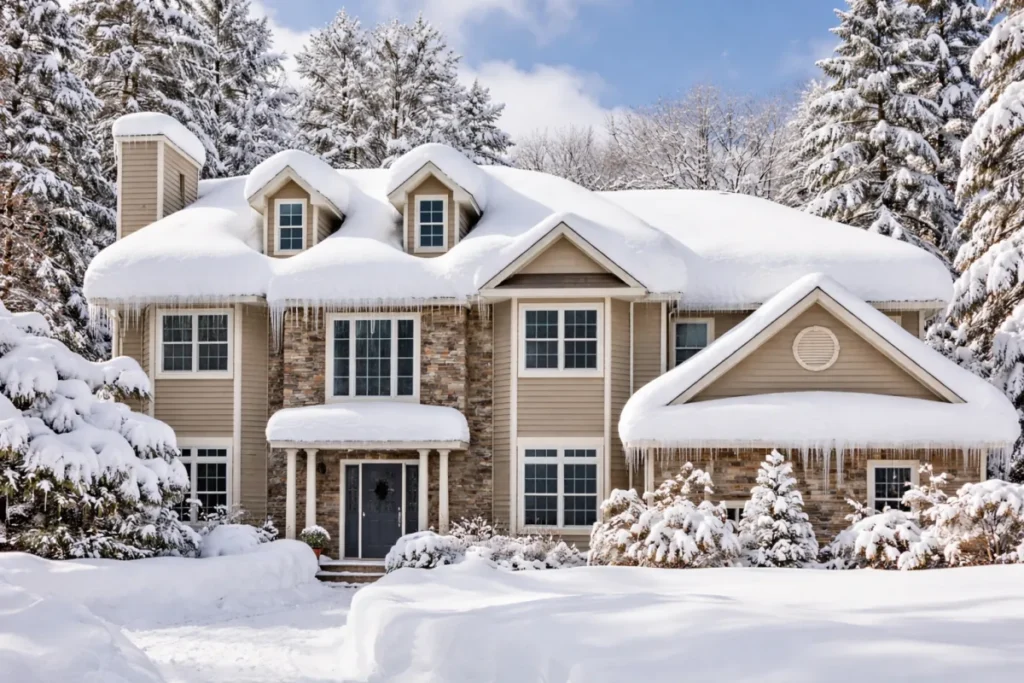
Winter in New York’s Capital District can be beautiful. Fresh snow settles quietly across rooftops and neighborhoods. For a while, everything feels calm, then the snow keeps coming.
If you’ve looked up at your house after a storm and wondered whether there’s too much snow on roof surfaces, you’re asking the right question. Snow may look light, but snow weighs far more than most people expect. Under certain conditions, accumulated snow can strain your structure and, in rare cases, lead to a roof collapse. Let’s walk through what actually matters, what warning signs to watch for, and what you should do next.
Why Snow on Your Roof Isn’t Just a Winter Nuisance
The real issue isn’t how deep the snow looks. It’s how much it weighs and how that weight changes over time. Six inches of fresh snow might not raise concern. But that same six inches after melting, refreezing, and absorbing rain can become dense and heavy. The type of snow makes a big difference. Light, powdery snowfall has low water content. Wet snow carries far more moisture, which means more weight pressing down on your roof.
In the Capital District, we deal with regular freeze-thaw cycles. Snow melts during the day and refreezes overnight. That process increases density and creates ice buildup. Over time, snow loads become heavier even if the depth doesn’t appear to change much.
How Much Snow Can a Typical Residential Roof Hold?
Most residential roofs can support around 20 pounds per square foot before structural stress becomes a concern. Many are designed to meet local ground snow load standards, but every structure is different.
How much your roof can handle depends on several factors. The age of the structure matters. So do the roofing materials, the pitch of the roof, and whether there have been previous repairs or hidden damage. A steep roof naturally sheds snow better than a flat roof, which allows snow to sit and accumulate.
Flat roof snow loads require special attention because there’s little slope to encourage melting snow to slide off. This is especially important for commercial properties, where large flat roof areas can collect significant weight during heavy snowfall.
Does Wet Snow Weigh More Than Dry Snow?
Yes, and the difference can be dramatic. Fresh snow is light and airy. It may weigh just a few pounds per cubic foot. Wet, compacted snow can weigh four to five times more. As snow absorbs moisture or partially melts, the water content increases. Just one inch of water spread over a square foot weighs more than five pounds. When snow holds the equivalent of an inch of water per foot of depth, the load adds up quickly. This is why two roofs with the same amount of snow can experience very different stress levels. The type of snow and how long it has been sitting there often matter more than the visible depth.
How to Estimate Snow Load on Your Roof
You may have seen an online snow load calculator. These tools estimate weight based on depth and density. They can offer a rough idea, especially when you factor in local ground snow load data. However, calculators can’t account for drifting snow, uneven accumulation, blocked drainage, or existing weak points in the structure. Snow loads aren’t always evenly distributed. Wind can push snow into valleys or against roof edges, increasing stress in specific areas. If you’re unsure whether your roof can handle the current conditions, an on-site evaluation provides far more reliable insight than a general formula.
Can Heavy Snow Cause a Roof Collapse?
A roof collapse is uncommon, especially in well-maintained homes built to local code. Still, it can happen when extreme snow loads combine with structural weaknesses. The warning signs usually appear before failure. You might notice a sagging ridge line or a dip in a flat roof. Inside, ceiling cracks can form. Doors and windows may start sticking. In some cases, homeowners hear popping or creaking sounds as framing members shift under pressure. Leaks can also develop as ice dams trap water along the roof edge.
If you see any of these signs, it’s important to take them seriously.
Ice Dams and Added Weight
Ice dams create more than just water damage. They add weight and prevent proper drainage. When heat escapes from the attic, it melts snow near the peak of the roof. That water runs downward and refreezes at the colder edge. Over time, ice builds up, trapping additional melting snow behind it. The combined weight of snow and ice increases pressure on roofing materials and can lead to leaks. Ice dams are often a sign of ventilation or insulation issues. Addressing those underlying problems can reduce long-term winter stress on your roof.
Should You Remove Snow From Your Roof?
Sometimes removing snow is wise. Other times, it’s better to leave it alone.
If you have dense, wet snow that has built up to more than a foot, or if you’re seeing warning signs like sagging or interior cracking, removing some of the load can reduce stress. Flat roof structures deserve special attention because snow doesn’t slide off naturally.
That said, safety comes first. Climbing onto a snow-covered roof is dangerous. Slips and falls are common. Even if you stay upright, shoveling can damage shingles or other roofing materials. A roof rake allows you to remove snow from the edge while standing safely on the ground. Even then, you should avoid chipping at ice or standing directly beneath areas where snow could slide off. When conditions feel uncertain, calling a professional is often the safest choice.
Commercial and Flat Roof Considerations
Commercial properties face different challenges during heavy snowfall. A flat roof can collect snow evenly across large areas. As snow melts and refreezes, ponding water may form. Blocked drains can worsen the issue. Flat roof snow loads should be monitored carefully after multiple storms. Even if each snowfall seems manageable on its own, the accumulated snow from several events can add up quickly. Business owners who schedule routine inspections before and during winter often catch small issues before they become larger structural concerns.
Preventing Snow Load Problems Before Winter Starts
Preparation goes a long way in protecting your roof. A pre-winter inspection allows small repairs to be addressed before snow arrives. Checking attic insulation and ventilation helps reduce ice dam formation. Clearing gutters and drains ensures melting snow has a proper path to exit the roof. When your roof system is in good condition, it handles winter stress much better.
What to Do If You’re Worried About Too Much Snow on Roof Surfaces
If you’re concerned, start by observing. Look for visible sagging, uneven snow buildup, or signs of ice dams. Pay attention to interior ceilings and listen for unusual noises. If snow appears dense and heavy rather than light and powdery, remember that wet snow carries significantly more weight. Using a roof rake from the ground may help reduce edge buildup. Avoid climbing onto the roof yourself. When in doubt, have it checked. A professional inspection can determine whether the roof can handle the current snow loads or if action is needed.
Snow Is Manageable With the Right Approach
Most roofs can support typical winter conditions in the Capital District. Problems tend to arise when snow becomes saturated, ice forms, or small structural issues already exist.
Understanding how snow weighs, how water content affects density, and how accumulated snow behaves over time gives you clarity. Instead of guessing, you can make informed decisions.
Snow Concerns in the Capital District? We’re Here to Help
At Star Roofing, we take every job personally because we live here too. We understand local weather patterns, heavy snowfall, and how roofs in this region respond over time. We work on both residential and commercial properties, and we approach every project with respect for your home or building.
If you’re worried about too much snow on roof surfaces, ice dams, or potential structural stress, let’s talk. We’re happy to assess the situation and help you decide on the safest next step. Give Star Roofing a call to schedule an inspection or ask questions about your roof this winter. We stand behind every roof, and we’re here when you need us.